The most-heard phrase in shell trade is "quality goods". That is not a definition but a wish. We prefer to speak of the shipment in numbers. Below are the value bands we work to, the product-form options, and how the delivery process runs.
The value bands we work to
| Parameter | Target band | Reference standard |
|---|---|---|
| Moisture | ≤ 10% | ISO 18134 |
| Ash (dry basis) | ≤ 3% | ISO 18122 |
| Lower heating value (LHV) | ≥ 3,900 kcal/kg | ISO 18125 |
| Particle size (raw) | 5–20 mm, sieved | ; |
| Foreign matter | ≤ 1% | sieving + visual check |
| Origin | single-type hazelnut shell | declaration |
These are not a fixed promise but our working band. Harvest period, origin and storage conditions can move the numbers; that is why we share in writing, at the offer stage, which band we work to on each shipment.
Let us clarify three points in particular:
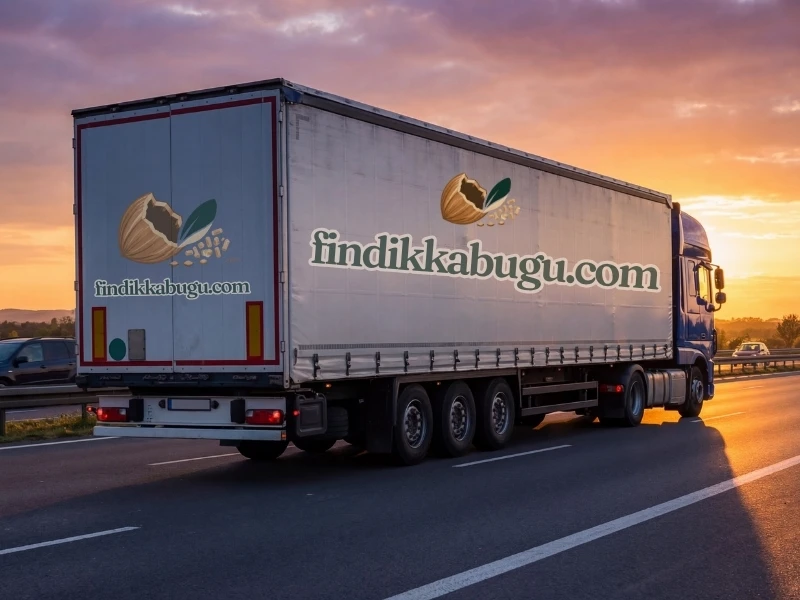
We state moisture at the delivery point. Shell at 8% in the warehouse reaches a very different value at delivery if it takes rain in open transport. We carry shipments closed/tarpaulined and tie the moisture commitment to the moment of delivery. For us this is also a matter of commercial transparency: water that carries no energy should not be sold as product.
We state the ash value on a dry basis. In a moist sample the ash ratio appears lower than it is. Dry basis is the only ground comparable from season to season.
We speak of heating value via LHV. HHV is the right measure for comparing fuels; the energy that actually enters your boiler is LHV. We make the offer accordingly so you can build your budget on that line.
Sample and analysis
On high-tonnage agreements we run the process as follows:
- Pre-sample. Before the contract, we send a composite sample taken from different points of the stack. A sample taken from a single point does not represent the batch.
- Laboratory report. On request, we coordinate accredited-laboratory analysis and share the report.
- Sample retention. A sealed sample from each batch stays with us for a set period. Its purpose is not to start a dispute; but if one arises, to have a document looked at rather than memory.
Published literature ranges such as 18–19 MJ/kg are for planning; the offer and contract are made with shipment-specific values.
Product form: raw or ground?
We can ship the shell in the raw (broken) form at the cracking exit, and we can also prepare it ground to request.
Grinding has two different reasons:
Process requirement. A blasting abrasive wants specific mesh ranges; a pellet line wants much more finely ground raw material; landscaping and bedding applications seek a uniform particle size. In these channels grinding is not a preference but a requirement.
Logistics requirement. Grinding shrinks the particle size and thereby increases the bulk density. The direct result: more product fits in the same big-bag, the same silo volume and the same vehicle.
The degree of the density increase depends on the grinding fineness. When you state your target particle range, we calculate together the net weight per bag and per vehicle.
Packaging options
Bulk. The lowest packaging cost per tonne. The right choice for facilities with a silo, bunker or enclosed storage yard. Unloading is fast and requires equipment.
Big-bag. Moved and stacked by forklift; stock management can be done batch by batch. Protected against moisture and contamination.
Let us clarify a frequent confusion here: a bag's carrying capacity and the amount of product that fits inside it are not the same thing. The carrying capacity of standard big-bags is given as 1,000–1,250 kg; but this is a weight limit, not a volume one.
Because the bulk density of raw hazelnut shell is on the order of 300 kg/m³, unground shell does not reach 1,000 kg in a big-bag. The bag looks full but does not give that figure on the scale. This is not a shortcoming but the nature of a light, bulky material. When grinding is done, because bulk density rises, markedly more product fits in the same bag.
That is why on big-bag orders we speak of net tonnage, not bag count. We tell you up front how many bags it corresponds to, according to the product's particle size.
Sacks (25–50 kg). For retail, HoReCa and the landscaping channel. The highest cost per tonne, but the only format that reaches the end user.
Container and volume planning
The most overlooked matter in export: shell is a light, bulky load. Because bulk density is low, most shipments reach the container's volume limit, not its weight limit.
Practical results:
- Product price should be thought of per tonne, and freight per m³. We make this distinction together when preparing the offer.
- On long-distance shipments, grinding, pelleting and briquetting make sense not only for product performance but also for freight economics.
- We can calculate together, by target port, after which distance densification pays for itself.
After delivery: storage
- Enclosed and ground-insulated stock. Even a concrete floor gives moisture from below; we recommend a pallet or insulation layer.
- Do not overdo the stack height. Moist product can generate internal heat in a high stack.
- FIFO rotation. Old stock left to the end of season does not give its first-day values due to moisture and crumbling.
Repeatability: the real matter
The standard must be provided not only on the first batch. Running sieving, sizing, grinding and moisture control systematically reduces the variation between products shipped on different dates. Recording and tracking the quality, tonnage and delivery commitments given is a supply criterion as important as price.
Customer-specific work is not only preparing a different product: target moisture, particle size, grinding range, packaging, monthly batch size and delivery schedule are set together from the outset. Target values are first confirmed by sample and analysis; then turned into a regular supply standard.
Sources: ISO 18122 (ash), ISO 18125 (calorific value), ISO 18134 (moisture) solid-biofuel analysis standards; ISO 17225-1:2021 solid-biofuel classification; ISO 17828 bulk-density determination.
For your tonnage, product form, packaging and delivery plan, get a quote.
Related content
Frequently Asked Questions
How do you guarantee quality?
Values are confirmed by analysis for each batch; moisture, ash and heating value are stated per shipment. A sealed sample is kept for a set period.
How does delivery work?
Orders are discussed in net tonnage; to protect moisture, shipments travel covered or tarpaulined, and net tonnage is confirmed at shipment.
What packaging options are available?
We offer bulk (truck), big-bag and sacks, with a grinding service on request.
Can I get a sample before ordering?
Yes. For higher-tonnage enquiries we provide a batch-based sample taken from different points of the stack, along with a quote.
Ready to Explore?
Plan your next order with Fındıkkabuğu and see the difference yourself!
Browse Our Products