The most expensive form of hazelnut shell is not its best-known form. Sold as fuel, it is spoken of by the tonne; turned into activated carbon, its unit value rises many-fold. The difference is hidden in a single physical quantity: surface area.
What the number says
In a particular study, the BET surface area of raw hazelnut shell was measured at about 1.68 m²/g, while the surface area of a sample slowly pyrolyzed at 900 °C was 666 m²/g. These values can vary with the properties of the shell used, the heating rate, the residence time and process conditions.
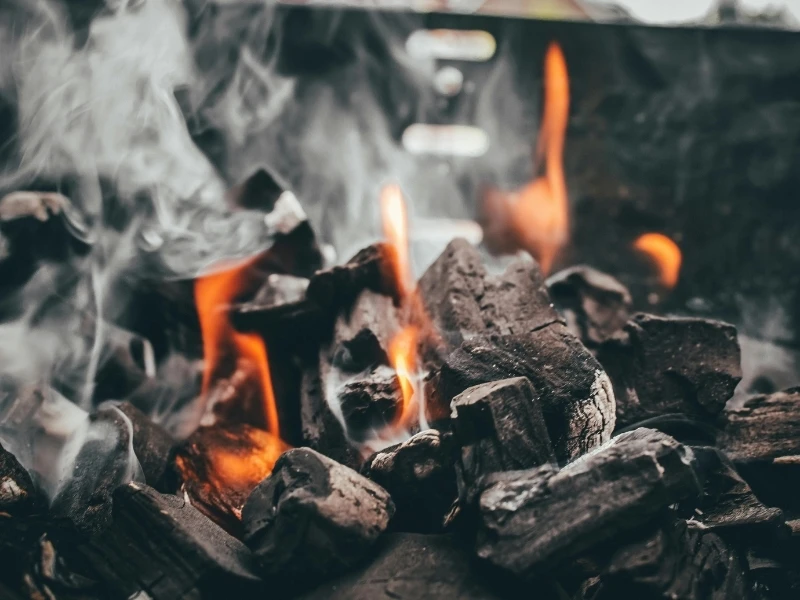
During pyrolysis, the material's chemical composition and physical structure change together. With the removal of volatile components, a carbon-rich skeleton and microscopic pores form. Adsorption is the retention of molecules on this large inner surface.
With chemical activation the numbers rise further. In the literature, hazelnut shell carbon has been activated with potassium hydroxide (KOH) or potassium carbonate (K₂CO₃), markedly developing the pore structure; as the activator/carbon ratio rises, porosity develops, but beyond a certain threshold the structure begins to collapse. So "more chemical, better carbon" is not the case.
Why hazelnut shell is a good precursor
Activated carbon can be produced from any carbonaceous material. Three properties make shell stand out:
High lignin. In the literature, the lignin ratio of hazelnut shell is mostly given in the 35–40% band. Lignin-rich precursors can offer an advantage in carbonization yield and carbon-skeleton formation. The final product's mechanical strength depends not only on lignin but also on carbonization, activation and shaping conditions.
Low ash. In activated carbon, ash is dead weight that occupies pore volume and contributes nothing to adsorption capacity. Shell's ash ratio in the 1–3% band is advantageous compared to most agricultural residues.
Domestic, regular supply. The raw material appears on its own with each year's harvest. Compared to imported precursors such as coconut shell, logistics cost and supply risk are markedly lower.
A domestic alternative to coconut shell
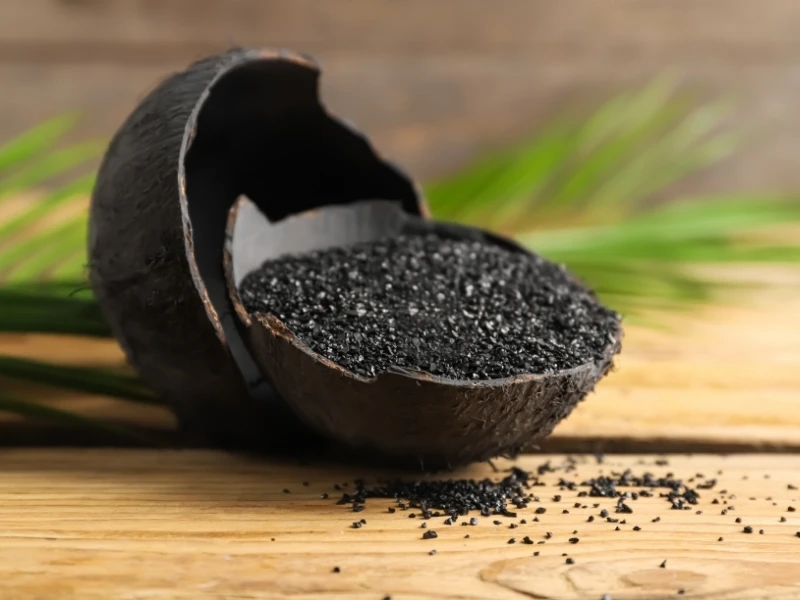
Coconut shell is a strong reference in the high-quality activated-carbon market. Hazelnut shell's aim is not merely to imitate it on price; it is to compete in the same value chain through domestic raw material, low-ash potential, mechanical strength and controlled pore development.
A performance comparison should be made not by raw-material name but by fixed carbon, ash, volatile matter, hardness, BET surface area and target-application tests.
Another difference of hazelnut shell is that it does not require felling a tree for this purpose. Making use of an agricultural by-product that already forms during the separation of the kernel is a circular option that can reduce pressure on forest-origin carbon raw materials.
Where it is used
Studies on activated carbon and biochar from hazelnut shell reveal a wide range of applications:
- Water treatment. It has been reported effective in removing heavy-metal ions (such as lead, cadmium, copper, zinc, chromium, nickel) from aqueous media. Adsorption behaviour mostly fits the Langmuir isotherm, and kinetics the pseudo-second-order model.
- Dye and antibiotic removal. Dyes in textile wastewater and pharmaceutical residues are a studied area.
- Gas-phase and analytical applications. There are studies where steam-activated hazelnut shell carbon is used as an adsorbent in the capture of volatile organic compounds (VOCs) and their measurement by GC-MS.
- Oil treatment. Hazelnut shell biochar has been reported to lower free fatty acidity and the anisidine value in waste frying oil, showing no significant difference compared to commercial activated carbon.
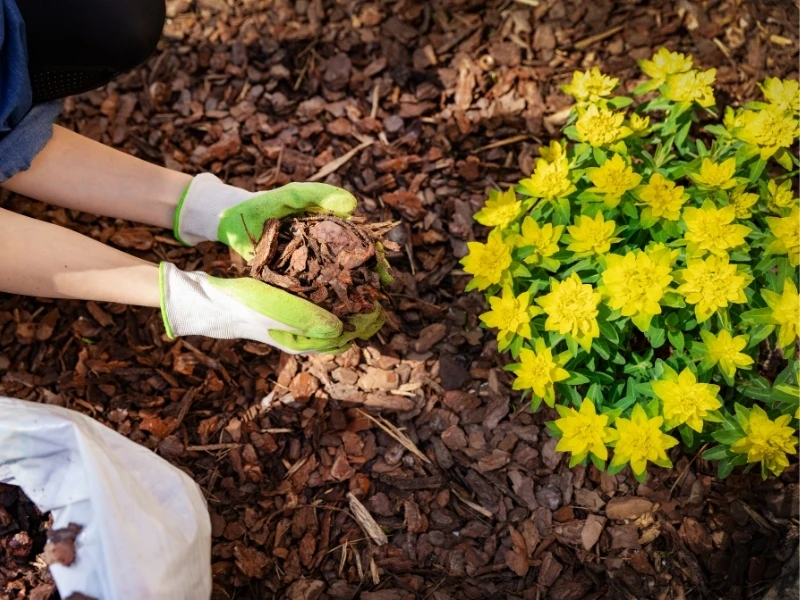
- Soil applications. When worked into the soil in biochar form, it has an effect on water retention and aeration.
What the raw-material buyer should look at
The activated-carbon producer comes with a different specification list than the fuel buyer:
| Parameter | Why it matters |
|---|---|
| Particle-size distribution | Determines activation homogeneity and yield |
| Ash ratio | Reflects directly on product quality |
| Moisture | Storage and furnace energy consumption |
| Foreign matter | Soil and stone raise the ash ratio |
| Single origin | Mixed shell does not give a repeatable product |
The last item on this list is often skipped. When hazelnut, walnut and peanut shell come mixed, a different pore structure is obtained in each batch; which means quality fluctuation in serial production. Requesting single-origin, sieved, dry shell is the cheapest insurance for an activation line.
A raw-material standard before the investment
An activated-carbon investment cannot be set up only by furnace temperature, activation chemical or target BET value. When the raw shell's origin, ash, moisture, particle size and carbonization history change, the same activation recipe can produce a different surface area, pore distribution and yield. Forcing non-standard raw material into a fixed recipe leaves the investor constantly adjusting the process.
Water treatment, gas-phase adsorption, oil treatment and analytical applications do not want the same pore structure. So targeting only "high BET" is not enough; the target surface area, micro–meso pore distribution, hardness, ash, particle size and moisture must be evaluated together.
We define these variables together according to the customer's process, confirm the targets first by sample and analysis, then turn them into a repeatable supply standard. For our full working model: Raw hazelnut shell; our working model
The upper step of the value chain
Burning shell is using the energy in it once. Turning it into activated carbon is turning it into a material that will work for years. Shifting part of this flow, which appears at every harvest on the Black Sea, from the fuel side to the material side means both an export item and a domestic precursor for industry.
Sources: published studies on the characterisation and adsorbent performance of hazelnut-shell biochar (proximate analysis, TGA, BET measurements); literature on producing activated carbon from hard-shelled fruit residues by KOH and K₂CO₃ activation and on pore structure; studies on the use of hazelnut-shell activated carbon as an adsorbent in VOC analysis.
For activated-carbon raw material, target particle size and project requirements, get in touch.
Related content
Frequently Asked Questions
Why is hazelnut shell a good activated-carbon precursor?
High lignin (~35-40%) gives a carbon-skeleton advantage, low ash (1-3%) reduces dead weight, and supply is domestic and regular; logistics cost and supply risk are lower than imported coconut shell.
Is high BET enough?
No; target surface area, micro–meso pore distribution, hardness, ash and particle size are defined together for your process, and confirmed first by sample and analysis.
Which applications is it used in?
It has been studied in water, gas and oil treatment: heavy-metal removal, dye and antibiotic treatment, VOC capture and waste-oil upgrading. The target pore structure is defined together by application.
Ready to Explore?
Plan your next order with Fındıkkabuğu and see the difference yourself!
Browse Our Products