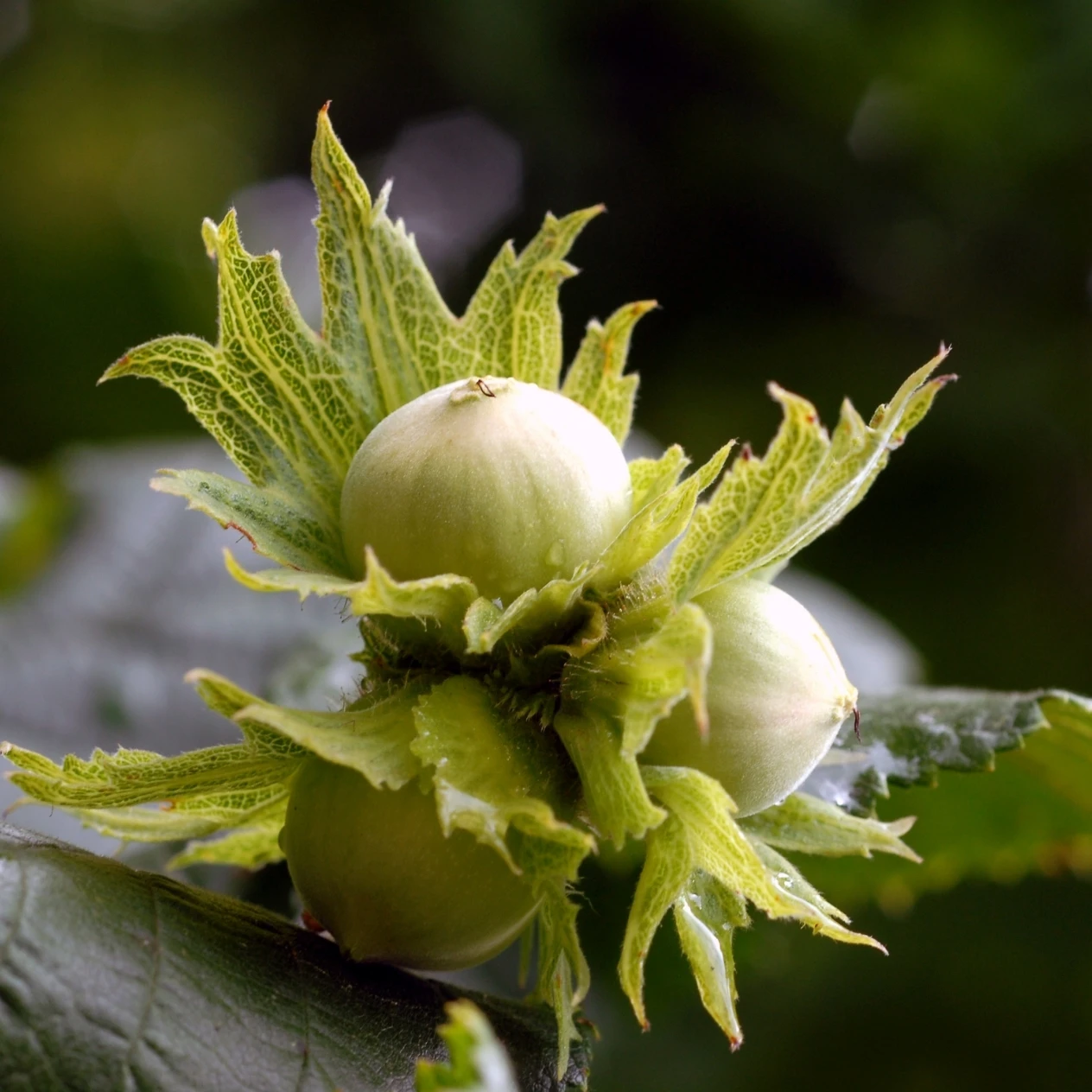
In hazelnut shell supply, geography is as decisive as price. Shell is a light, bulky load; the farther from the source, the faster freight's share of total cost grows. That is why "where do you buy from?" comes before "how much?"
The production geography in numbers
According to Ministry of Agriculture and Forestry data, Türkiye's hazelnut production area has reached 748,716 hectares. The provinces with the largest area:
| Province | Production area |
|---|---|
| Ordu | 227,216 hectares |
| Samsun | 124,968 hectares |
| Giresun | 117,729 hectares |
| Sakarya | 77,990 hectares |
| Trabzon | 65,240 hectares |
Ordu, Giresun and Sakarya are three centres representing both the eastern and western wings of Turkish hazelnut. The 2026 estimated crop was announced as 704,195 tonnes; the part exceeding 195,000 tonnes is expected from Ordu alone. Sakarya is the highest-yield province of the Western Black Sea, standing out with over 100,000 tonnes in season estimates.
Given the yield basis; roughly 1 tonne of in-shell hazelnut leaves about half a tonne of shell; it becomes self-evident why shell supply concentrates around these three provinces.
Three provinces, two rhythms
The line is not a single piece; it consists of two complementary wings:
Ordu and Giresun; the centre of volume. This is where cracking and processing capacity is densest. These provinces also lead in hazelnut trading volume on the commodity exchanges. The backbone of shell supply comes from these two provinces.
Sakarya; the western gate. The production centre logistically closest to the Marmara and Central Anatolia markets. The distance advantage on shipments to the İstanbul, Bursa, Ankara and Thrace line arises here.
The practical result for the buyer: your delivery province determines which wing it is more economical to be fed from. Taking goods to a greenhouse in Konya from Giresun is not the same calculation as from Sakarya. That is exactly the meaning of working across all three provinces: the same product ships from the point nearest you.
Why shell gathers next to the cracking industry
Shell appears not in the orchard but at the factory. Hazelnut cracking (shelling) plants create the product the moment they separate the kernel from the shell.
This brings three things:
Volume aggregation. Product from thousands of scattered orchards is processed in a limited number of plants. So shell appears not scattered like production, but at discrete points.
The possibility of quality control. At the plant exit, sieving, drying, sizing and grinding to request can be done. This is not possible with scattered shell collected from villages; that is where the specification difference arises.
Continuity. The cracking season concentrates between October and February; suppliers who work with stock can also deliver off-season.
Season calendar
| Period | What happens |
|---|---|
| August–September | Harvest and drying. TMO purchases begin. There is no shell yet. |
| October–February | The peak of the cracking season. Shell supply is here; moisture is low. |
| March–July | Cracking slows. Supply comes from stock. |
Heating demand peaks in November; meaning the period of most abundant supply coincides with the period of highest demand. For operations with a set annual tonnage, the right move is to lock the purchase at the start of October.
What proximity to the region gains the buyer
Freight. The bulk density of shell is on the order of 300 kg/m³. As distance grows, freight's share of total cost grows. This is not a matter of negotiation, but of physics.
Moisture control. A short distance reduces the time spent on the road and therefore the risk of picking up moisture.
Season assurance. Stock close to cracking capacity lowers the risk of running out of fuel mid-winter. For greenhouse and bakery operations, this is a more critical item than price.
Verifiability. Shell of known source and single origin gives a far more consistent analysis than a mixed batch. For activated-carbon, briquette and pellet producers, this is the precondition of repeatable production.
Where we are
We operate from Ünye, Ordu. Our supply is three-legged: Ordu and Giresun cracking capacity feeds volume, and the Sakarya line shortens Marmara and Central Anatolia shipments.
This structure has a single purpose: wherever your delivery province is, the goods ship from the point nearest you. Every hundred kilometres in between writes directly to the tonne cost on a bulky load.
We deliver in three formats; bulk, big-bag and sacks; the product can be prepared raw (broken) or ground to request. Just write your delivery province, tonnage and product form.
Sources: Ministry of Agriculture and Forestry 2026 crop assessment and production-area data; TMO 2026/27 in-shell hazelnut purchase terms; exporter unions' and commodity exchanges' hazelnut data.
Write your delivery province and annual tonnage: get a quote.
Related content
- What Is Raw Hazelnut Shell and What Is It Used For?
- Specification, Packaging and Delivery
- Raw Hazelnut Shell; product page
Frequently Asked Questions
Where do you source the hazelnut shell?
We supply from the Ordu, Giresun and Sakarya belt, the heart of Turkish hazelnut and its cracking industry.
Is your product single-origin?
Yes. We supply sieved, dried, single-origin shell; we avoid mixed shell so quality and analysis stay repeatable.
Where are you located?
In the Ordu-Giresun region of Turkey.
How does delivery work?
Orders are discussed in net tonnage; to protect moisture, shipments travel covered or tarpaulined, and net tonnage is confirmed at shipment.
Ready to Explore?
Plan your next order with Fındıkkabuğu and see the difference yourself!
Browse Our Products